# How to Understand Wholesale Lab Grown Diamonds Price Compared With Retail Prices in the United States
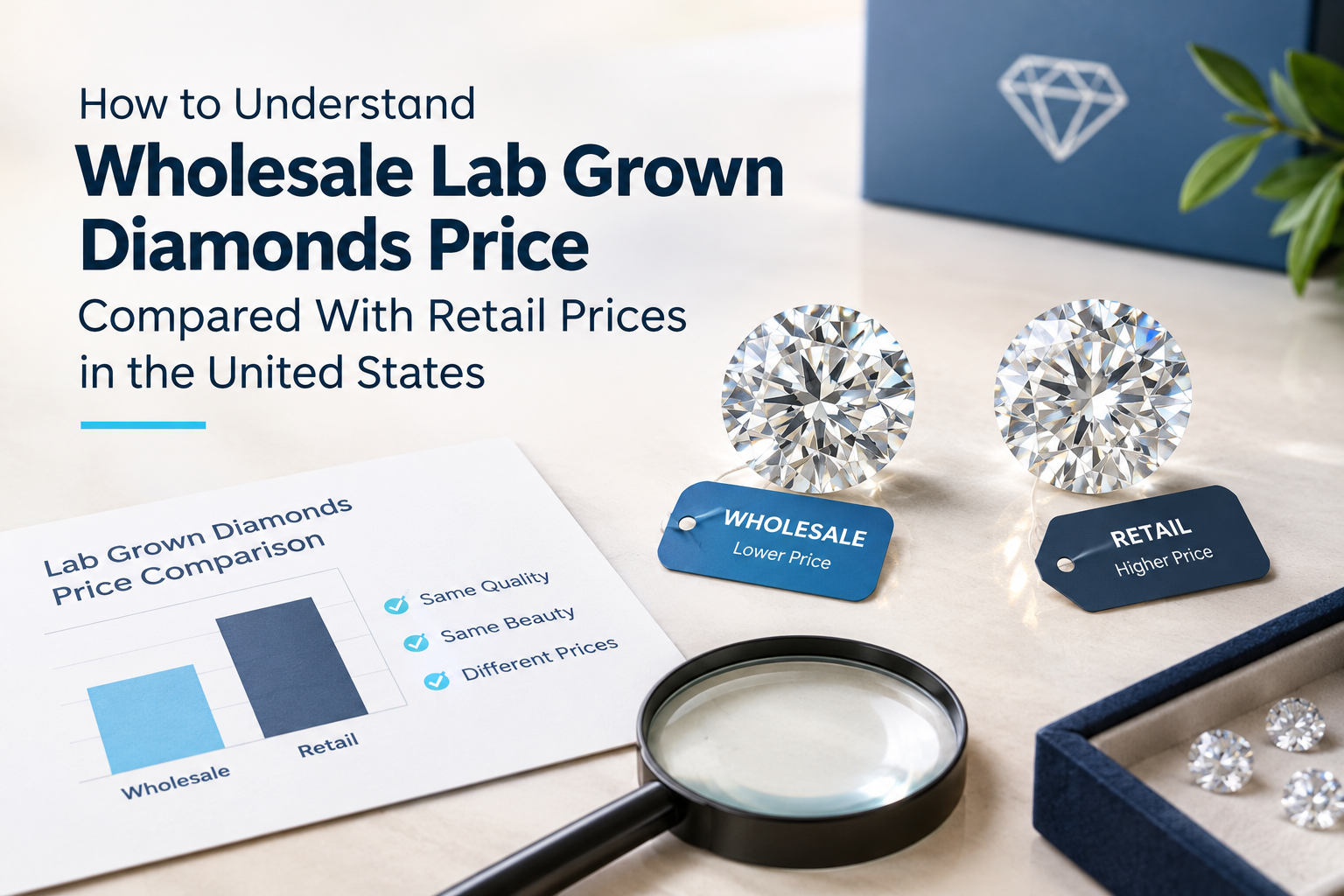
Why can two [lab grown diamonds](https://pad.ccc-p.org/s/iOg5XMOFhq) with similar details have very different prices? One reason is where the stone is sold and what the price includes. In the United States, wholesale prices usually refer to business-to-business transactions, while retail prices are what consumers pay through a shop or online store. The lab grown diamonds price can also change with carat weight, cut, colour, clarity, shape, supply, and seller costs.
Precious Carbon helps buyers learn about lab grown diamond pricing and the details worth checking before making a purchase. This guide explains how wholesale and retail prices differ, what can be included in each, and how to compare offers without relying on the headline price alone.
---
## What Does Lab Grown Diamonds Price Mean in Wholesale and Retail Markets?
The [lab grown diamonds price](https://preciouscarbon.com/collections/lab-diamonds) is the amount charged for a laboratory-created diamond, but the term can refer to different stages of the supply chain. A wholesale quote is generally intended for trade buyers purchasing inventory, while a retail price is offered to an end customer and may include service, presentation, operating costs, and consumer protections.
There is no single wholesale rate or standard retail markup that applies to every diamond. Prices vary by specification, quantity, seller, timing, and whether the quote covers a loose stone or a finished piece of jewellery. For that reason, any comparison should use stones with closely matched characteristics and clearly defined terms.
For quality verification, the Gemological Institute of America (GIA) describes laboratory-grown diamond services and reports that identify stones as laboratory-grown and provide quality information. Check the available report type and verify its details before relying on a listing:
---
## Wholesale vs Retail Lab Grown Diamonds Price: What’s the Difference?
The key difference is the buyer and the services bundled into the transaction, not necessarily the quality of the diamond itself.
| Factor | Wholesale price | Retail price |
| :--- | :--- | :--- |
| **Typical buyer** | Jewellery businesses or trade buyers | Individual customer |
| **Purchase size** | May involve multiple stones or repeat orders | Often one stone or one finished item |
| **Price inclusions** | May exclude setting, consumer support, and some services | May include setting, service, packaging, or other costs |
| **Availability** | May depend on trade account, minimum order, or stock | Usually displayed for consumer purchase |
| **Support and returns** | Terms depend on the trade agreement | Consumer-facing policies may apply; check the terms |
| **Best comparison method** | Confirm specification, quantity, and terms | Compare the full item and total checkout cost |
---
## Why Can Wholesale and Retail Prices Be Different?
A retailer may pay for inventory, quality checks, photography, website operations, staff, payment processing, shipping, returns, and customer service. These costs can contribute to the retail price. A wholesaler may quote a lower per-stone amount because the transaction is structured for trade, but that does not mean every wholesale offer is automatically cheaper once shipping, minimum quantities, taxes, and verification costs are considered.
---
## Which Factors Change Lab Grown Diamonds Price?
Wholesale and retail sellers both consider the diamond’s specifications and market conditions. These are the main details to compare.
### How Does Carat Weight Affect Lab Grown Diamonds Price?
Carat measures a diamond’s weight, not its exact face-up size. Larger stones often cost more, and prices may rise unevenly at popular weight points. Compare measurements as well as carat weight, especially when looking at stones with different shapes.
### How Do Cut, Colour, and Clarity Affect the Price?
Cut influences brightness and light return. Colour describes how colourless a diamond appears on the relevant grading scale, while clarity describes internal inclusions and surface blemishes. Higher grades can cost more, but a buyer should also consider whether a difference is visible and meaningful for their needs.
### Does Shape Make a Difference?
Round, oval, pear, emerald, radiant, and other shapes can be priced differently. Shape also affects how large a stone looks from above. Compare the same shape and similar measurements where possible, rather than assuming that equal carat weights will look identical.
### What Is Included in the Quote?
A quote may cover a loose diamond only or a complete ring. Confirm whether it includes a grading report, setting, metal, resizing, shipping, taxes, insurance, and return costs. A low advertised price may not be the lowest final cost if important items are excluded.
### What Does a Grading Report Tell You?
A grading or quality report documents specified characteristics of a diamond and identifies it as laboratory-grown when applicable. GIA notes that its laboratory-grown services use distinct report formats and laser inscriptions for identification. Report services differ, so read what the specific document actually covers and check the report number with the issuing laboratory.
---
## How to Compare Wholesale and Retail Lab Grown Diamonds Price Step by Step
1. **Match the specifications:** Compare carat weight, shape, measurements, colour, clarity, cut information, and any other listed characteristics.
2. **Confirm the transaction type:** Ask whether the quote is wholesale or retail, whether trade eligibility is required, and whether a minimum quantity applies.
3. **Check the report:** Request the report details and verify that the report corresponds to the diamond being offered.
4. **Calculate the full cost:** Add shipping, taxes, setting, payment fees, insurance, and any other charges that apply.
5. **Read the terms:** Review delivery estimates, return conditions, warranty coverage, and what happens if the delivered stone does not match the listing.
6. **Compare seller support:** Consider how questions, returns, repairs, and quality concerns will be handled after purchase.
Precious Carbon can be one point of reference while researching lab grown diamond options. Use the published product details and current quote available to you, then compare them with other offers that match the same specifications and purchase terms.
---
## How Can Buyers Spot a Misleading Price?
Be cautious when a listing does not provide enough detail to make a fair comparison:
* The listing shows carat weight but leaves out shape, measurements, or quality details.
* The seller uses the word “wholesale” without explaining eligibility, minimum quantities, or other conditions.
* The price is for a loose stone, but product photos show a finished ring without a clear explanation.
* The report number is missing, cannot be checked, or does not match the listed diamond.
* The advertised price excludes substantial charges revealed only at checkout.
* The return policy, delivery terms, or seller contact information is unclear.
---
## What Should You Know About Lab Grown Diamonds Price Trends?
Lab grown diamond prices can shift as production, supply, technology, consumer demand, and retail competition change. A quote is a snapshot, not a promise of future value. Buyers should avoid assuming that prices will rise or fall by a set amount and should focus on the current specifications, total cost, and intended use.
### Will Wholesale Prices Always Be Lower Than Retail Prices?
Not always when comparing the complete transaction. A wholesale quote may exclude services or require a larger order, while a retail offer may include a setting, support, and a consumer return policy. Compare like-for-like products and total costs before deciding which offer is better.
---
## Conclusion
Understanding wholesale and retail lab grown diamonds price in the United States starts with knowing what each quote covers. Wholesale pricing is generally designed for trade purchases, while retail pricing may include customer-facing services and additional costs. Neither label alone tells you whether a diamond is good value.
**Key takeaways:**
* Compare diamonds with closely matched specifications.
* Check the report and confirm it matches the stone.
* Calculate the final cost, not just the advertised price.
* Read quantity rules, shipping terms, returns, and warranty details.
Explore Precious Carbon’s lab grown diamond information and product details, then use the checklist in this guide to make a careful, informed comparison.
---
## Frequently Asked Questions
### Is wholesale lab grown diamonds price always cheaper than retail?
Wholesale prices are usually structured for trade buyers and may be lower per stone, but they can come with minimum quantities, trade eligibility, and extra costs. Retail prices may include services or protections. Compare matching specifications and the full cost before deciding.
### Why do two similar lab grown diamonds have different prices?
Small differences in cut, measurements, colour, clarity, shape, report details, availability, and seller terms can affect price. Even stones with the same carat weight may not be directly comparable. Review the full specification and view images or videos when available.
### What should US buyers check before paying for a lab grown diamond?
Confirm the exact stone specifications, report details, total price, taxes, shipping, delivery timing, and return terms. If buying a finished ring, check the setting and metal as well. Keep the invoice and report information for your records.
### How does Precious Carbon help readers understand lab grown diamonds price?
Precious Carbon’s pricing information can be used as a starting point for learning about lab grown diamond costs. Check current product details and terms, then compare them with offers for stones that have similar specifications. Do not assume a general guide is a live quote for every diamond.
### Can a grading report guarantee a diamond’s resale value?
No. A grading or quality report documents characteristics within the scope of that report, but it is not a promise of resale value or a future selling price. Resale offers depend on market demand, the stone’s details, buyer preferences, and the terms of the transaction.